
Why does Wellington Airport want to expand?
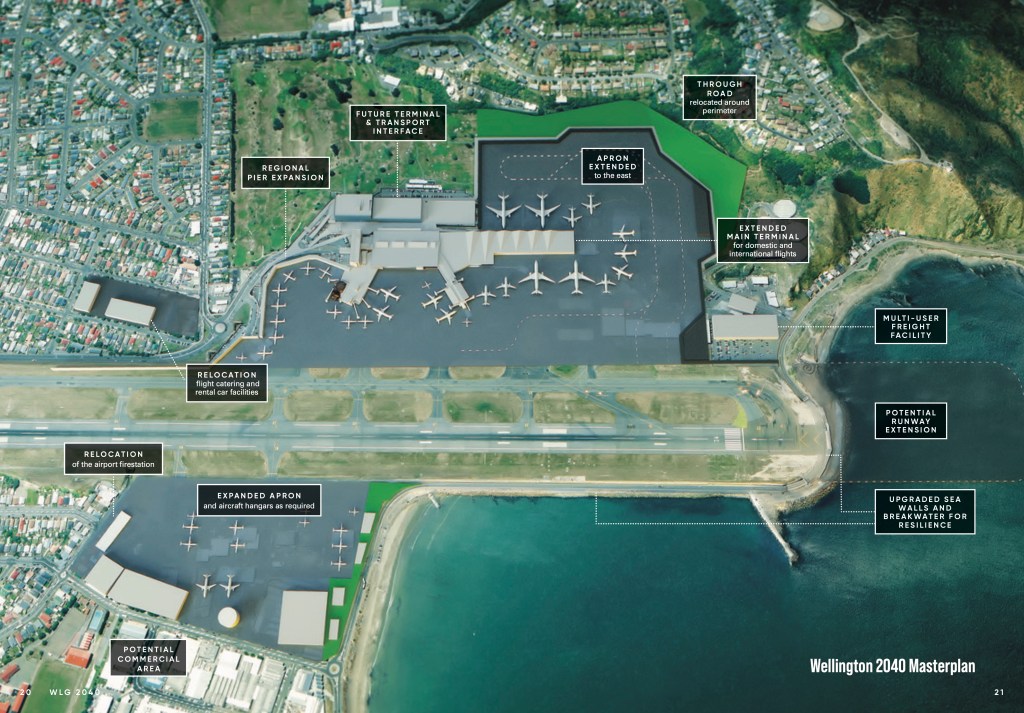
In its 2040 Masterplan, Wellington Airport outlines a vision where the runway is extended, and 15.6 hectares of the golf course is replaced with tarmac. This will enable the airport to increase its operations, and its shareholders’ satisfaction:
By 2040, we expect 12 million passengers to fly in and out of Wellington Airport every year – double the current numbers.
This was before COVID, and in a universe where climate change does not exist. To fulfil its vision, it bought half of the golf course (a buffer between the Airport and the residential area, according to the Welligton District Plan). In early 2021, it wants to change the land designation of the golf course land it owns from “golf course” to “airport operations”. Smart.
In the Full Notice of Requirements, Wellington Airport explains why they feel they need to expand their land area. It seems the residents are a customer pool to draw from, a cheap workforce and an annoyance:
Being conveniently located close to the City comes at a price for Wellington Airport, in that there are some legacy issues facing the Airport due to its establishment within existing residential suburbs surrounded by hilly terrain. One of the major constraints is the Airport’s limited landholdings.
Full Notice of Requirements, page 51
The “legacy issue” (aka the residents) is setting a limit to their plans to expand:
(…) However, there are limits to this intensification, and it has become clear via the master planning exercise that the Airport requires additional land to accommodate both its landside and airside activities, as well as remove existing operational constraints.
Full Notice of Requirements, page 51

Guardians of the Bays opposes this expansion
- With an expansion, Wellington Airport hopes to handle more air traffic. This will inevitably generates more carbon emissions, an inconceivable consequence in a climate emergency;
- With increased emissions coming from Wellington Airport (from increased air and land traffic), Wellington’s efforts to become carbon neutral by 2050 (through the Te Atakura program) will be even more jeopardised;
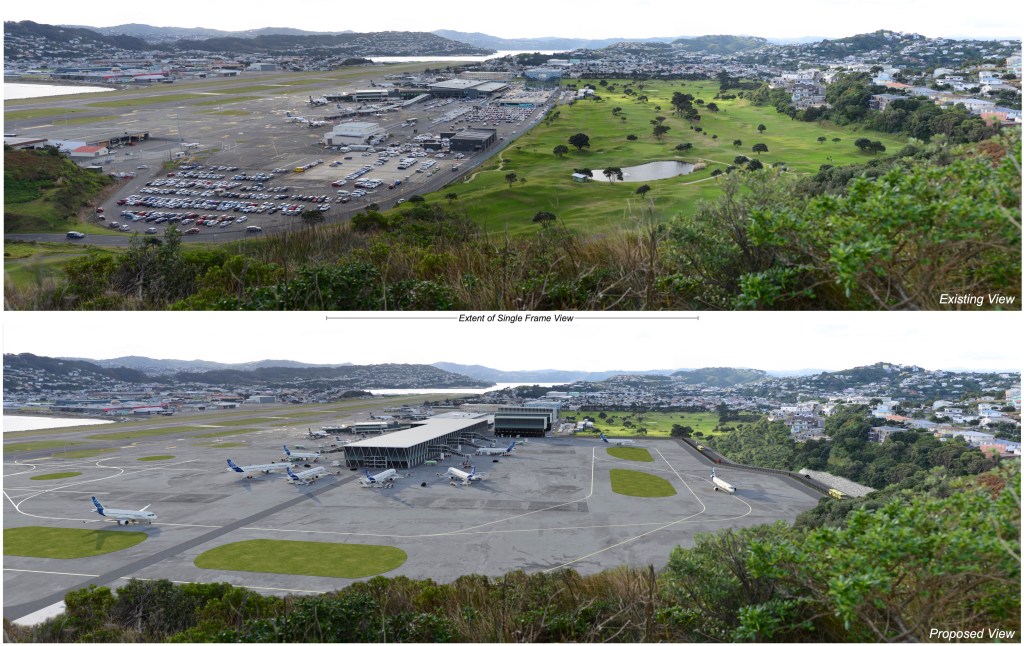
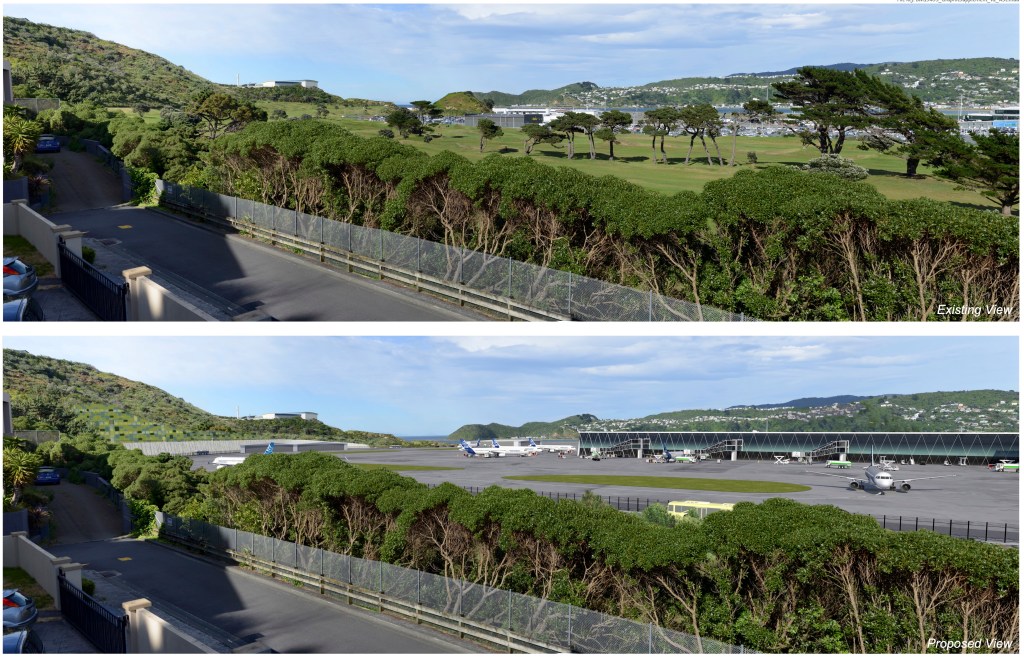
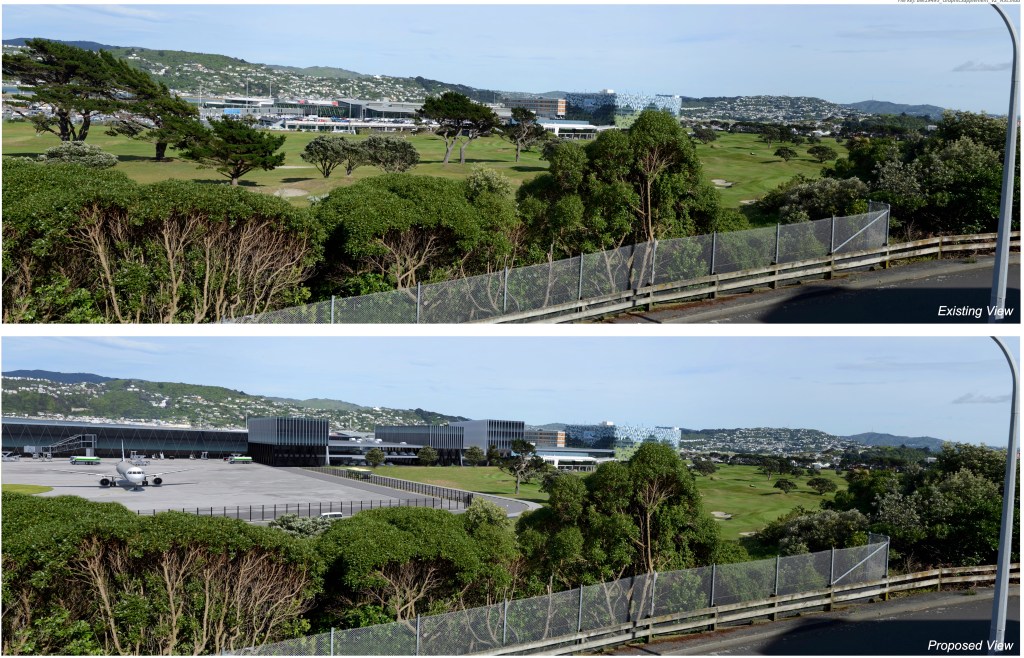
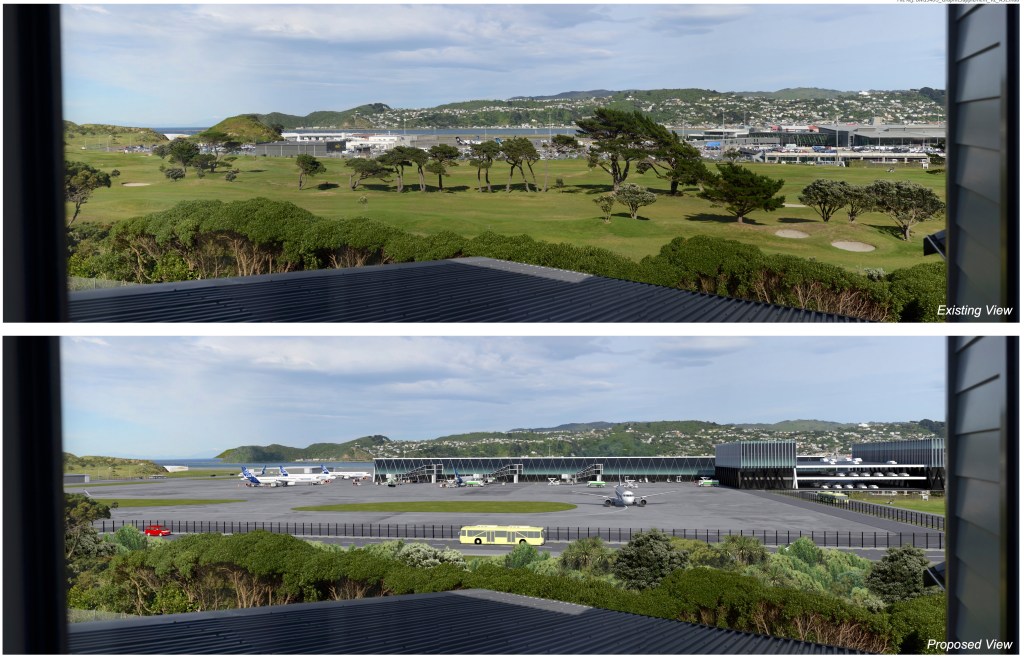
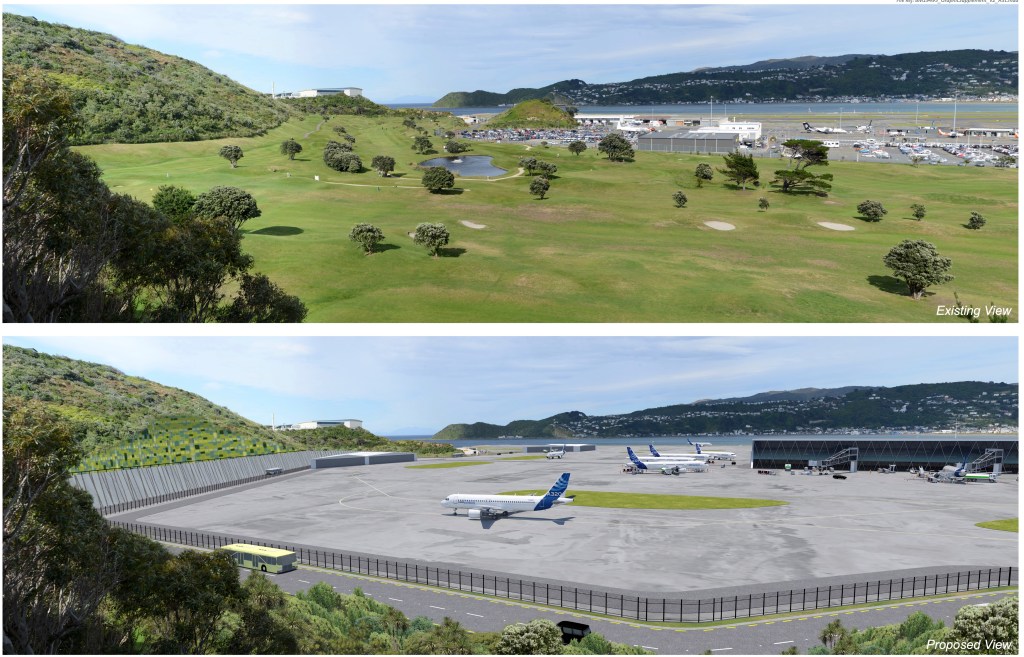
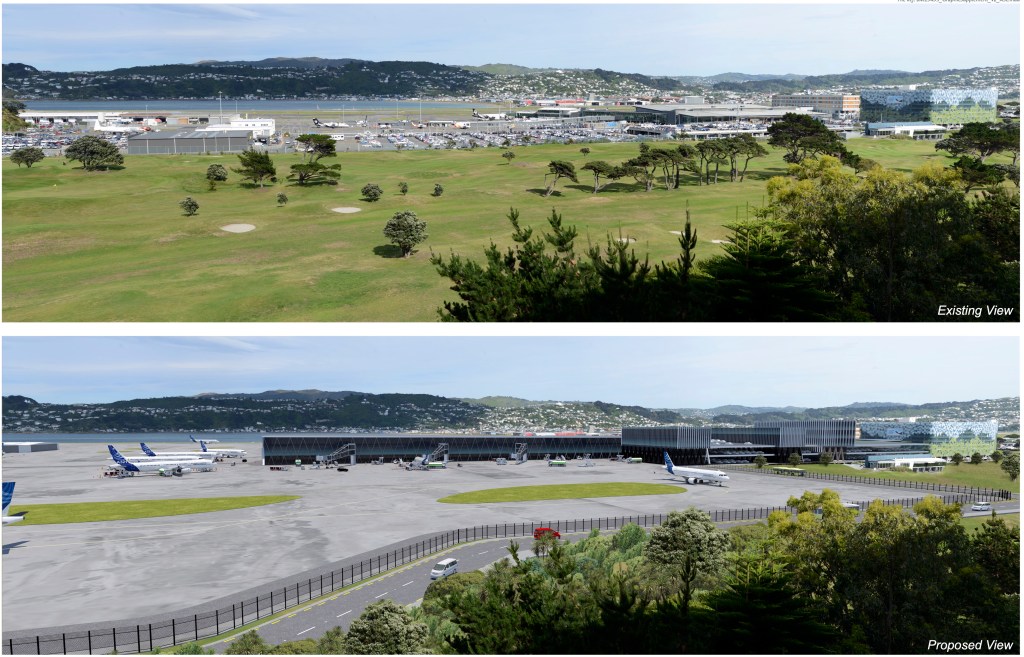
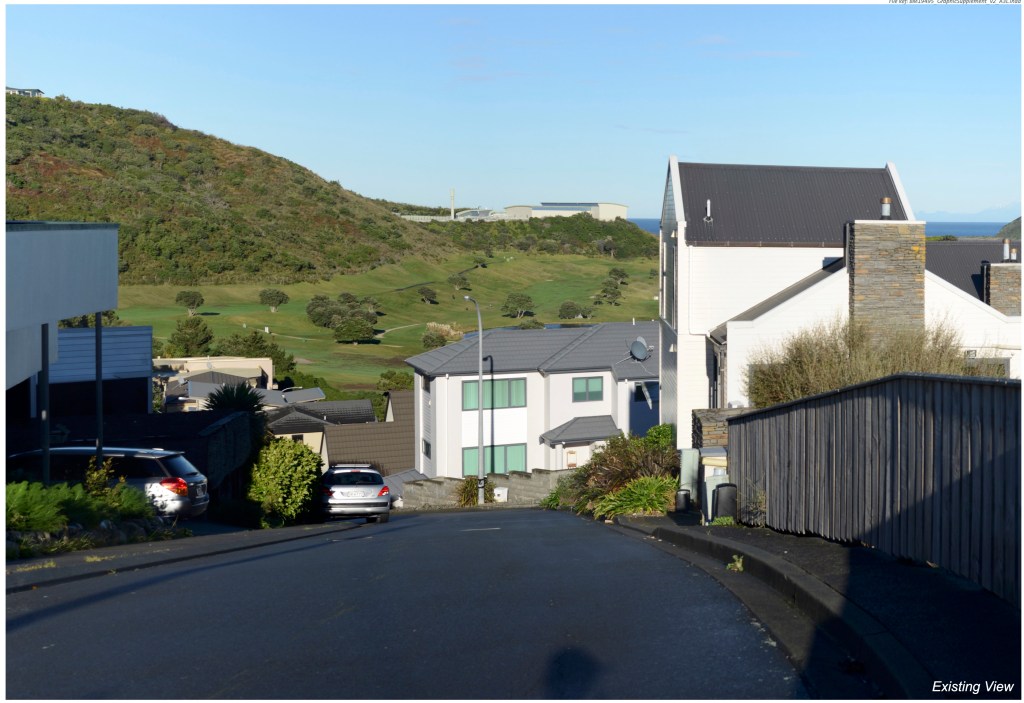
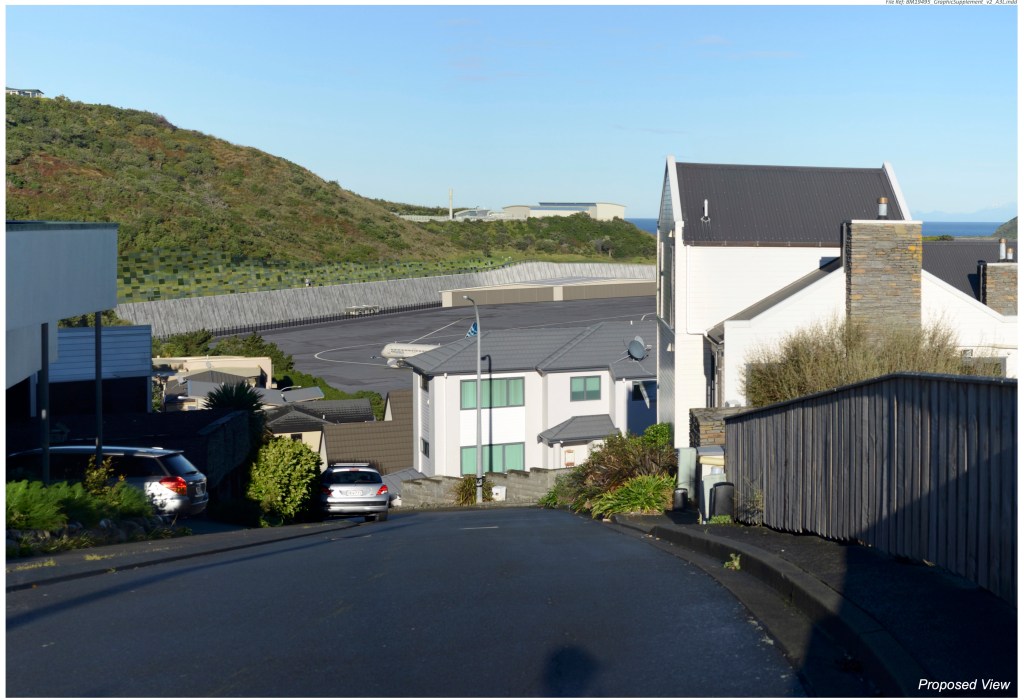
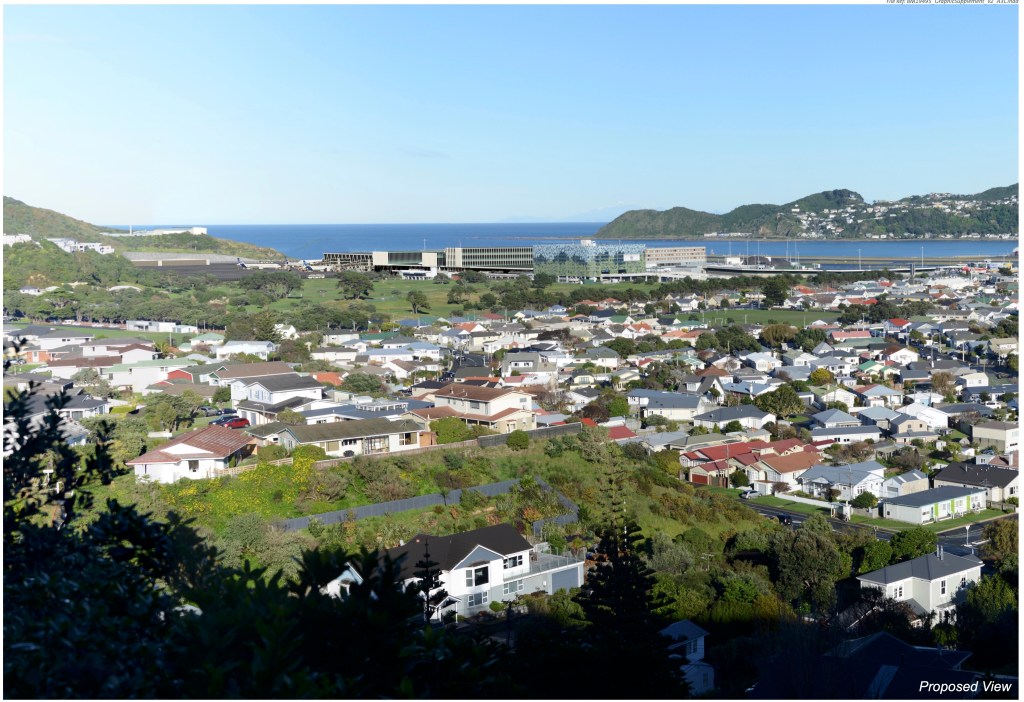
- This expansion will replace a green space, marked as a buffer in Wellington District Plan, with a plane park, bringing airport operations right next to Strathmore residents’ homes. This will destroy the livelihood of this suburb with no credible mitigation plan.
Support us: Donate
Latest post on the expansion
Guardians support councillors’ move to oppose airport expansion
Guardians of the Bays are supportive of the initiative by five City Councillors for the council to publicly oppose the expansion of Wellington Airport. City Councillors will vote on Thursday on whether to issue this statement. If passed, it will send a clear message to the Airport that Wellington, through the voices of its City Council, is…

What it’s going to look like
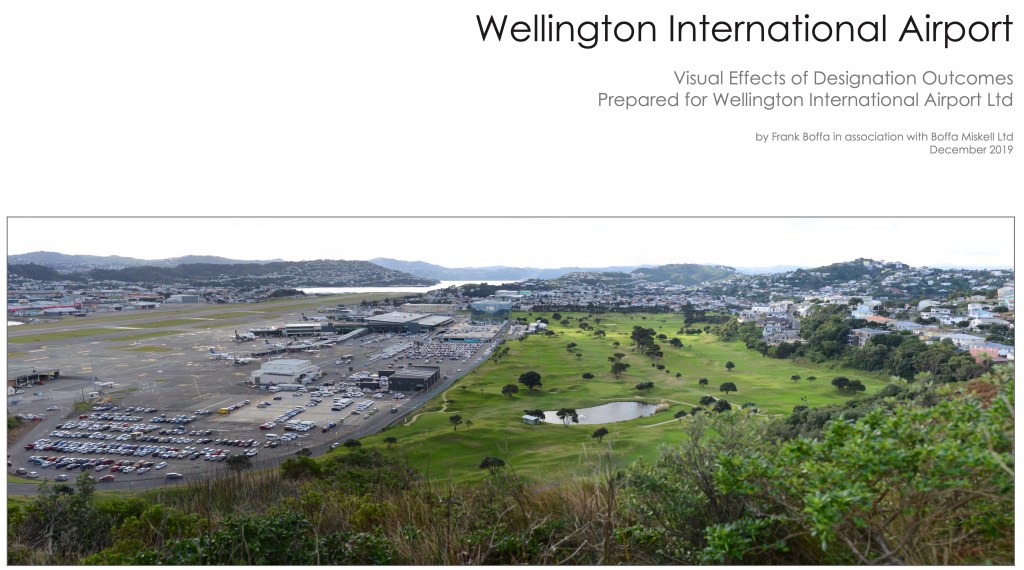
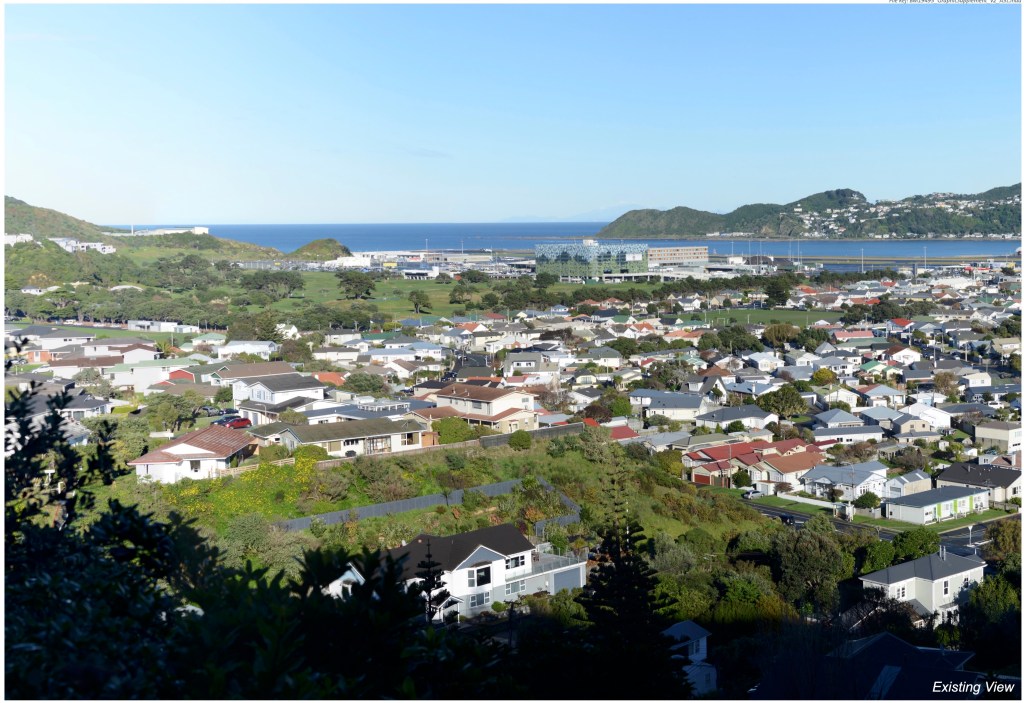
To change the land designation, the airport had to provide a full stack of materials, including a visual impact assessment. Below are renderings made by the airport and available in their full notice of requirements (from page 124).


What next?
The Guardians have consistently advocated for the containment of the airport and the minimisation of adverse effects on both the environment and community. The runway extension would have had very adverse effects on the natural environment of Wellington’s spectacular South Coast.
Expansion is now focused on the golf course. Development of the golf course will also have unacceptable outcomes for our environment but also for the airport’s immediate neighbours; the green buffer between local residents and the established airport will be paved with tarmac and taken over by airport activities. The Guardians have submitted their case against the development to the Environment Court. The court has directed interested parties to engage in mediation as a first step in resolving conflict and clarifying the views of the various parties. At this stage, mediation is expected to begin in late March or early April.
Preparation for mediation has been underway since December 2021. The Guardians are being supported by an excellent environmental lawyer and expert evidence is being provided on noise, landscape and amenity, and the projected increase in carbon emissions with the airport’s expansion. Your donations are all going to support this team of talented professionals working for the community.
How did we get there?
March 2022
Following our appeal, we have now entered a mediation phase, during which we will be negotiating hard to contain the adverse effects of the airport expansion. Adverse effects include noise, poor air quality and climate change. Around the table are the Guardians, the City Council and the Airport.
As usual, please consider donating to support the Guardians’ campaign against the airport expansion.
18th of October 2021
Guardians of the Bays appeal the East Site and Main Site Notice of Requirements. Doing so, we oppose the expansion of the airport for the damages it will inflict to the nearby communities and to the climate.
This will be a long, costly fight. Please consider donating to support the Guardians.
5th of October 2021
WIAL must have advised the Wellington City Council whether it accepts or rejects the recommendations in whole or part for each NoR.
As a Requiring Authority, they can ignore the recommendation, and even overwrite the District Plan and its rules, including noise protection for nearby suburbs! In their submission to the panel, they already indicated they wanted noise limits to be lifted!
24th of August 2021
The panel of Independent Commissioners has revealed their final recommendation on the change of land designation.
Guardians of the Bays is disappointed with the recommendation and is considering its options.
Late 2020, early 2021
Wellington City Council appointed an Independant Panel to review the land designation changes the Airport applies for, on the Main Site and the golf course.
A hearing was organised after the independant panel received about 350 submissions, mostly opposing the expansion.
 Guardians of the Bays